The Broken-Down Driver Test: Would an Auto Repair Customer Call You in 30 Seconds?
Your customer is stressed, skeptical, and standing next to a car that won't move. Your website has thirty seconds to answer three questions: do you fix this, can I trust you, and how fast can you see my car.
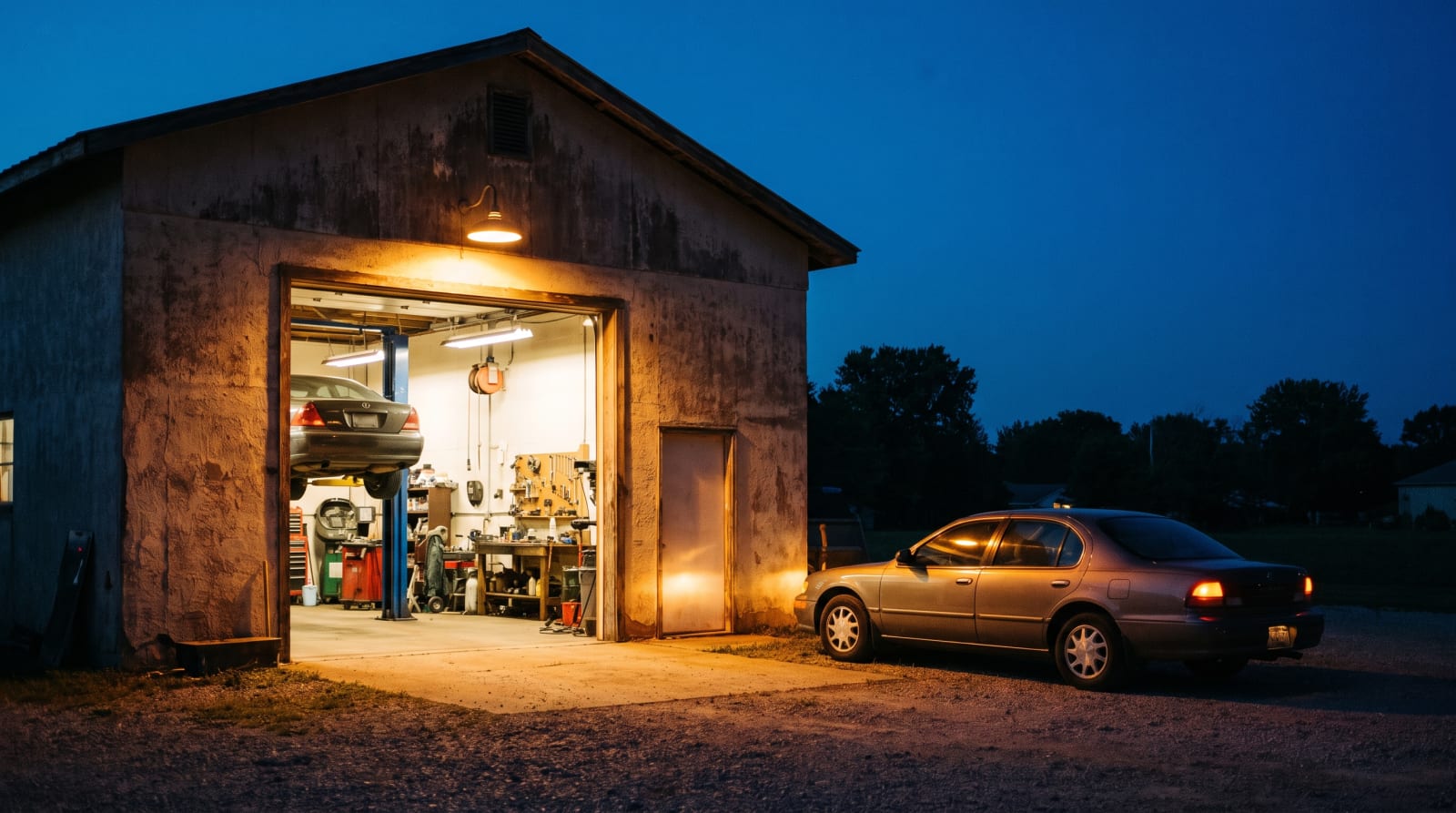
The auto repair customer is a special case in local services, because she arrives carrying two feelings at once that usually cancel each other out: urgency and skepticism.
Urgency, because the car is the day. No car means no work, no school pickup, no groceries. She needs this solved now.
Skepticism, because almost everyone has a story — the mystery line-items, the repair that begat three more repairs, the quote that doubled at pickup. Surveys of consumer trust put auto repair near the bottom of service industries year after year, and every shop owner knows it. You’re not just competing with the shop across town. You’re competing with the customer’s memory of the last shop.
Most repair-shop websites fail both feelings at once: too slow and cluttered for the urgent customer, too vague and generic for the skeptical one. The winning sites answer three questions, fast.
Question one: do you fix this?
Not “full-service auto care.” Not “import and domestic specialists.” The driver has a symptom — grinding brakes, a check-engine light, a bumper hanging off after a parking-lot incident — and she’s scanning your site for evidence that her symptom is your specialty.
Name the work the way drivers name it: brakes, transmission, AC, check-engine diagnostics, collision and body work. Put the list where the five-second rule demands it — top of the page, no scrolling, no menu-diving. If you’re a body shop that handles insurance claims, say that in the hero, because it’s the first question in every collision customer’s head.
Question two: can I trust you?
This is where the skepticism gets addressed — or doesn’t. The generic reassurances (“honest, reliable service!”) bounce off a customer who’s been burned; every shop she’s ever regretted also claimed honesty. What lands is the checkable stuff, stacked where she can’t miss it:
- Certifications that mean something — ASE, manufacturer programs, I-CAR for body work — as badges near the top, not buried on an About page.
- A warranty, stated in numbers. “12-month / 12,000-mile warranty on all repairs” does more anti-skepticism work than three paragraphs about your values.
- Real reviews, with detail. One specific story — “they showed me the worn rotor and quoted less than the dealer” — outweighs twenty generic five-star blurbs. Put your rating and count next to the call button, where the decision happens.
- Real photos. Your actual bays, your actual techs, your actual shop dog. A customer deciding whether to hand over her keys is imagining walking into your shop; show her the real one.
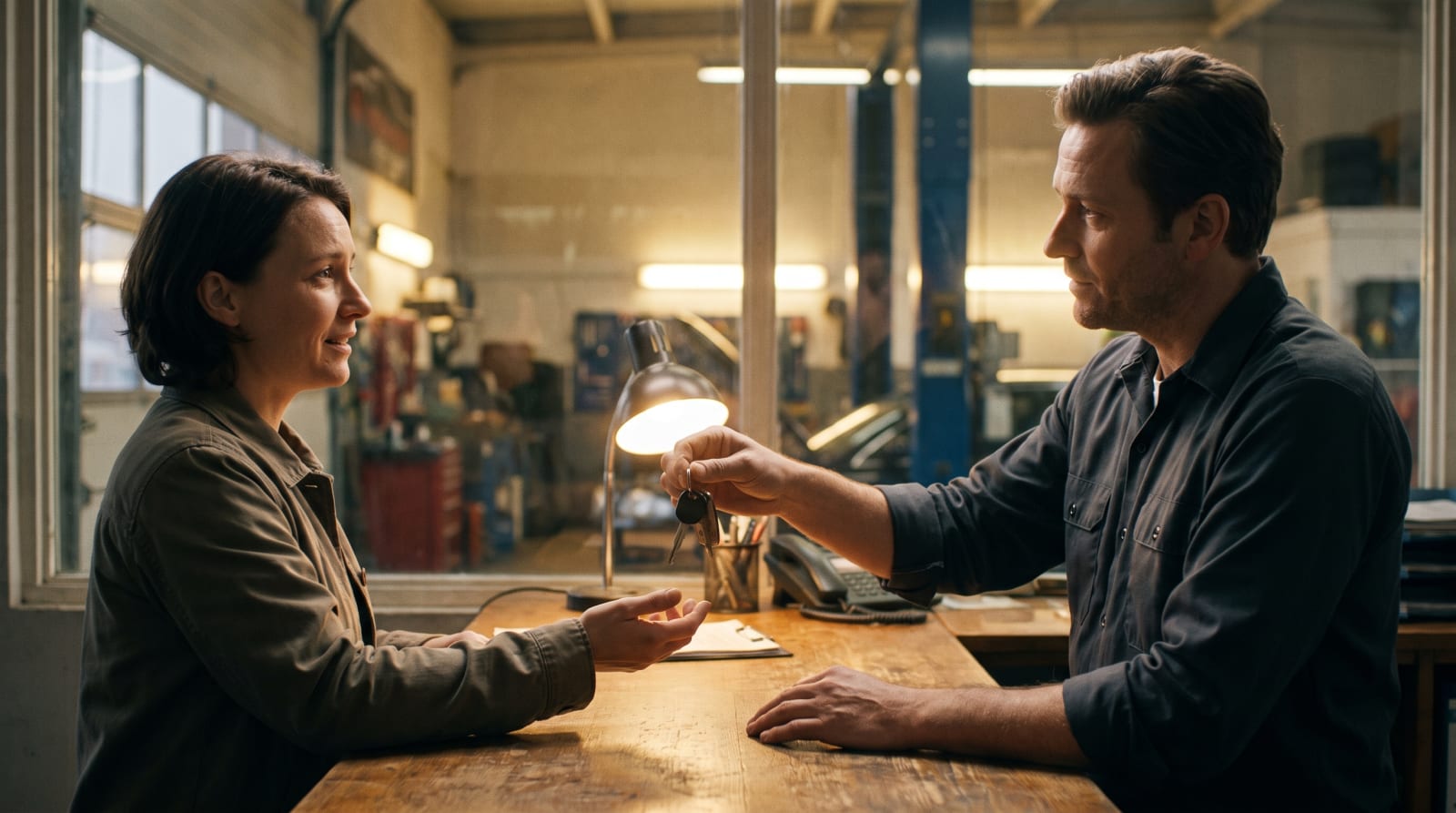
And the boldest trust move in this industry: honest price ranges. “Brake pads and rotors: typically $X–$Y per axle. AC diagnostic: $X, applied to the repair.” Most shops refuse — every car is different, why anchor yourself? But the customer knows ranges exist, and silence reads as they’ll decide what to charge me after they have my car. The shop that publishes ranges isn’t leaking information; it’s signaling it has nothing to spring on you. That signal wins the click-to-call over competitors hiding the same numbers.
Question three: how fast can you see my car?
Urgency’s turn. The driver with a dead car at 9pm isn’t calling — nobody’s answering — but she is deciding whose lot the tow truck drops it at. That decision goes to whoever offers a next step that works right now:
- Online booking or an after-hours drop-off form — “leave your keys in the drop box, tell us what happened here” — turns your closed shop into the one that’s still open.
- Hours, address, and a tap-to-call button that a shaking hand can hit on the first try. If your mobile experience makes her pinch and zoom to find the phone number, the shop with the big green button gets the tow.
- Tomorrow’s reality, stated plainly. “Most diagnostics done same-day.” “Loaner cars available.” “We work with all insurance carriers.” Each line removes one logistical dread between her and choosing you.
The test itself
Here’s the whole audit, and you can run it in a parking lot: hand your phone to someone who’s never seen your business, tell them “your car just broke down, you found this shop on Google,” and give them thirty seconds on your homepage.
Then ask: What do they fix? Would you trust them with your keys? What would you do next?
Three clear answers and your site is doing its job — the job of being the one calm, credible, reachable option in the worst hour of someone’s Tuesday. Any blank stares, and you’ve found the leak. As with everything in this series, the fix is rarely a redesign: it’s the top of one page, a warranty in numbers, a price range you already quote by phone anyway, and a button a stressed thumb can find.
The drivers are already breaking down. The only question is whose site is ready for them.