Yoli: Patient & Practitioner Dashboard
A patient and practitioner dashboard system for an at-home Omega-3 blood test, now used by roughly 30,000 patients and 5,000 medical professionals.
The Numbers
~5k
medical professionals using the dashboard
~30k
patients using the dashboard
~5k
test results delivered through the platform
12%
increase in enrollment since the new intake form launched
The Problem
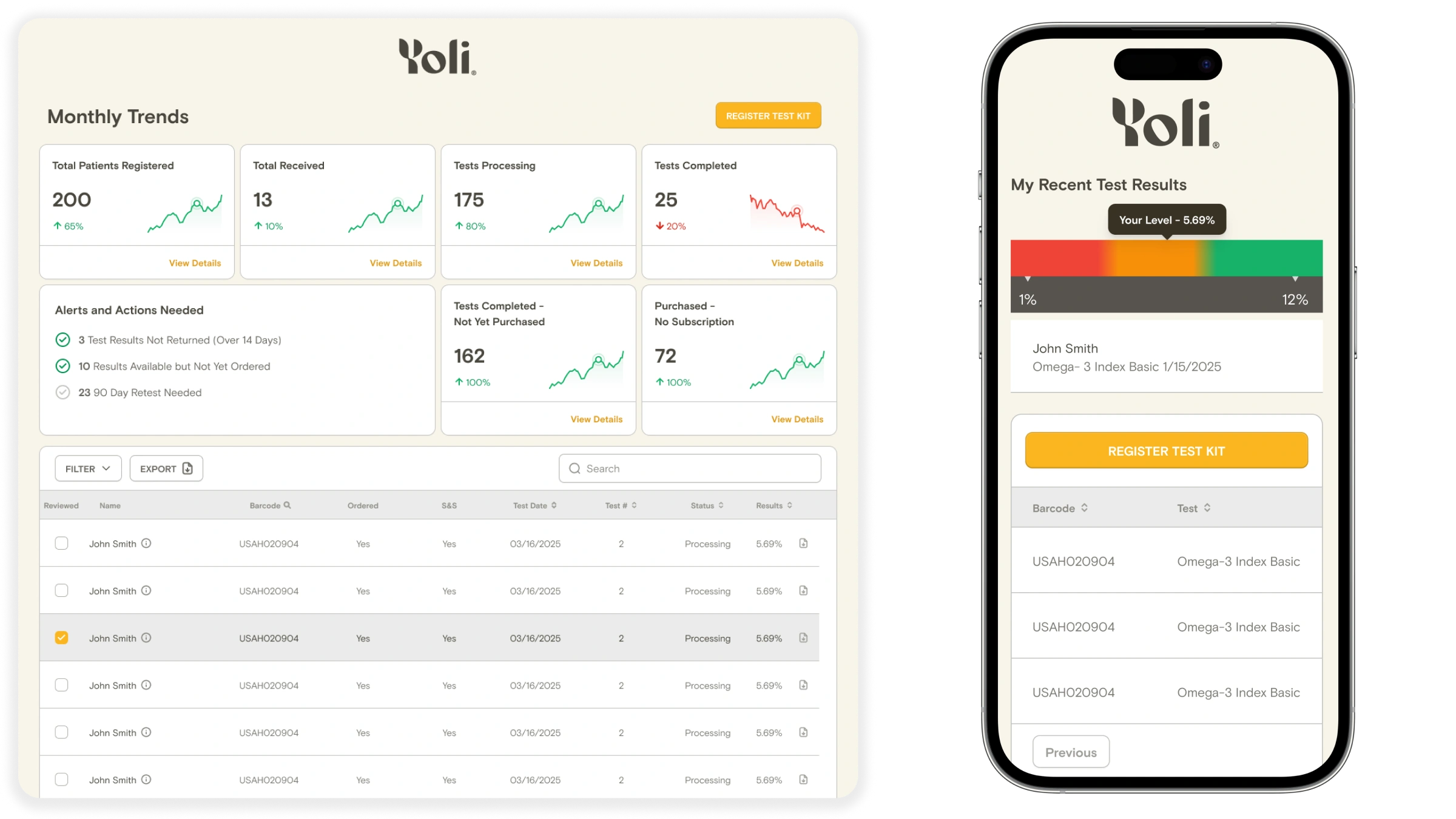
Yoli’s core product is an at-home blood test that measures Omega-3 levels. Someone buys a kit, takes it at home, and mails it back to a lab. That part hasn’t changed. What was missing was everything after the lab did its job. Patients got their results back by physical mail or a one-off email, a single number with no context and no way to see how it changed over time. Medical professionals had no way to look up a patient’s results, see who was overdue for a retest, or understand the health of their own patient base at a glance. It wasn’t a broken process so much as an unfinished one, the actual clinical infrastructure needed to catch up with the product.
Role and Constraints
I designed the dashboard system from the ground up, three connected experiences: a patient-facing view, a practitioner-facing view, and the intake flow that fed data into both. The core tension was that the same underlying data, someone’s Omega-3 index, had to serve two very different jobs. A patient needed to look at a number and instantly understand whether it was good, borderline, or a problem, without a medical background and without panic. A practitioner needed enough depth and filtering to actually manage a patient base, not just view one result at a time.
What I Built
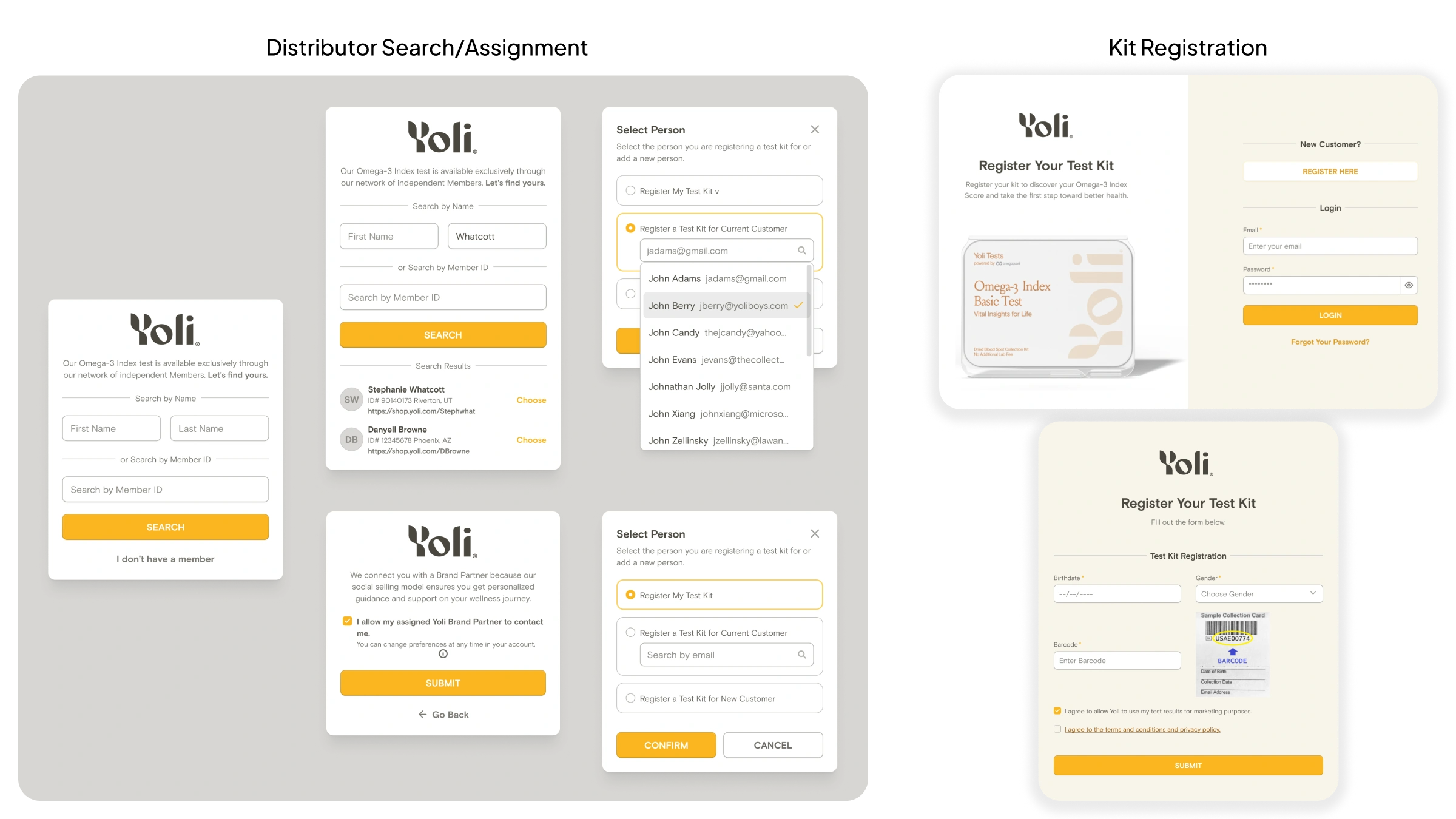
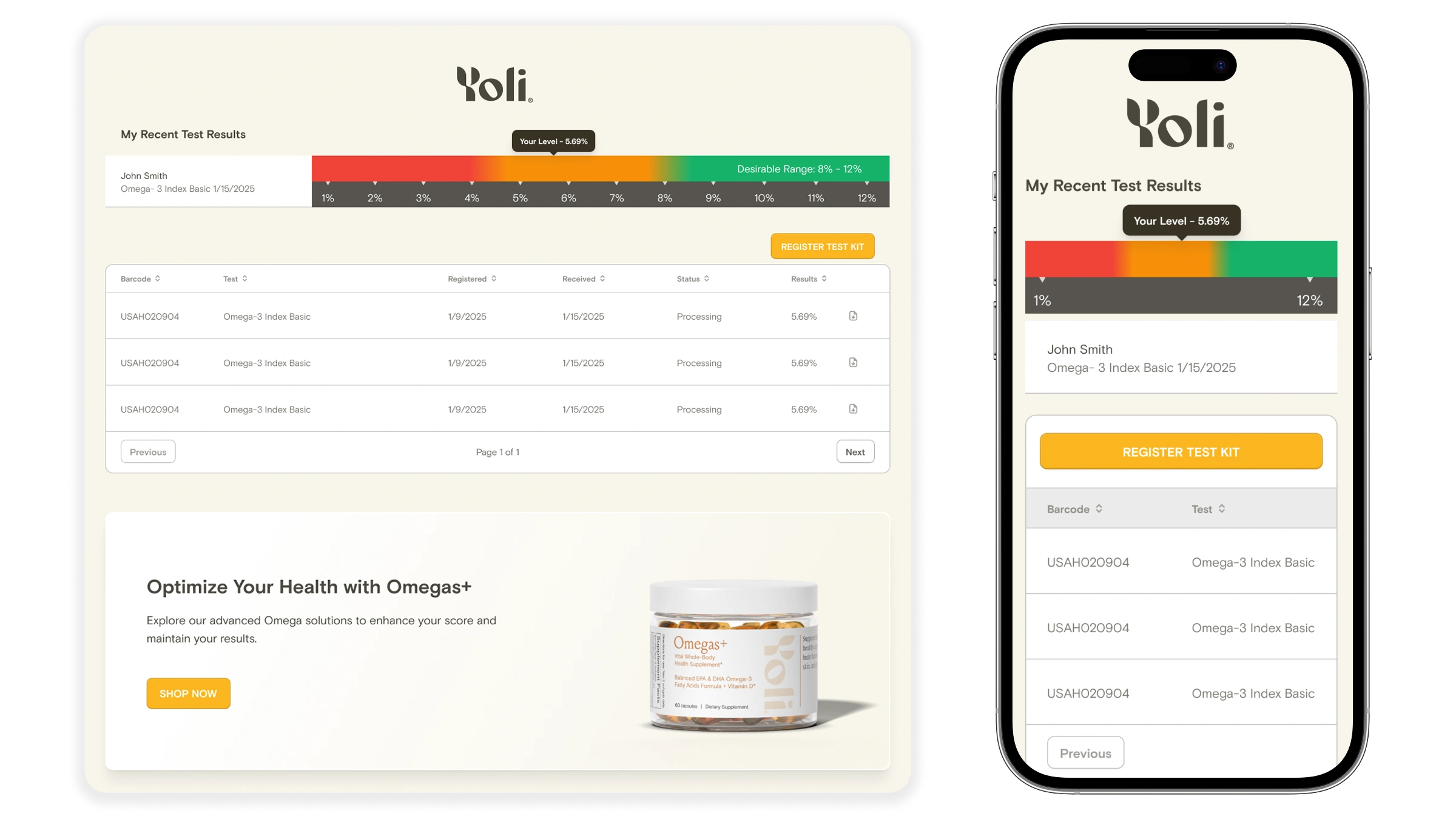
A new patient registers, fills out a short prefilled intake form, scans the barcode on their test kit, and gets a confirmation screen. From there they see an upsell for starter kits with a subscription offer, easy to take or skip. Once a lab uploads results, the patient sees their most recent score plotted on a 1 to 12 percent range, with 8 to 12 marked as the ideal zone. Once someone has multiple results, they can see their full history and register a new kit right from the dashboard.
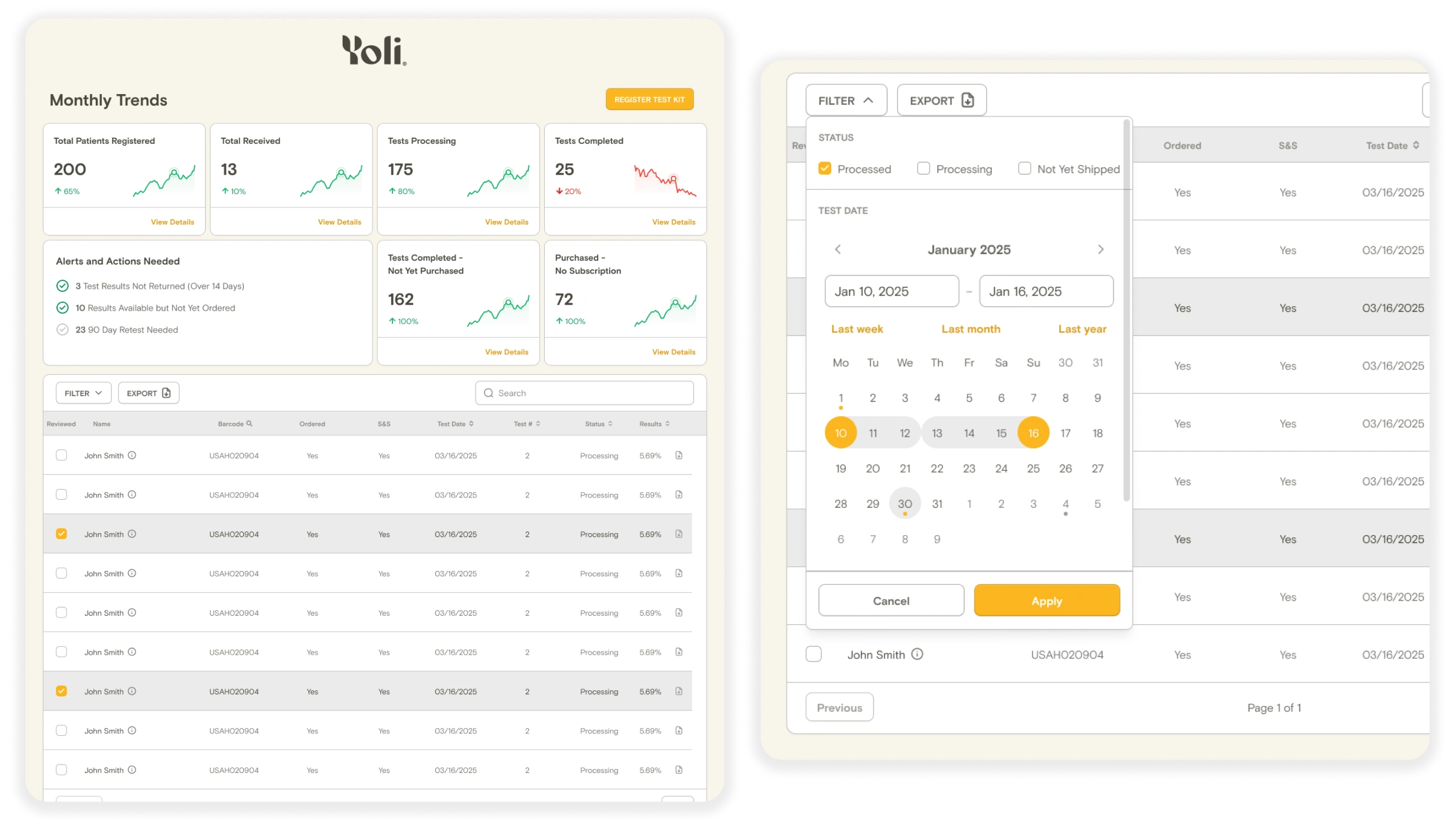
The practitioner view surfaces everything at a glance: total patients registered, tests received, processing, and completed, plus a set of flagged actions, patients who are overdue for a retest, or who bought a kit but never activated a subscription. Practitioners can filter and search by status and date range, and see patient contact details relevant to following up.
The gradient scale with the marked desirable range became the dashboard’s signature visual. It was already Yoli’s branding language for how they talked about the Omega-3 spectrum, and I built the entire results view around making that scale legible instantly, rather than asking anyone to interpret a raw number cold.
Results
The dashboard now serves roughly 5,000 medical professionals and 30,000 patients, with about 5,000 results delivered through the platform so far. Since the new intake form launched, enrollment is up 12%. Every prior manual step, someone individually emailing a result, is gone. Every patient now gets instant, ongoing access to their own data instead of a single number in an inbox.
What I'd Build Next
Right now, each patient manages their own account in isolation, even when results are relevant to a whole family. I’d build a household account structure, so a husband and wife, for example, could each track their own results without needing separate logins to keep it organized.
I’d also push further on the practitioner side, more proactive tools for knowing exactly when and who to reach out to, patients whose results are overdue, patients who bought a kit but never sent it back, patients ready for a next step. Right now those actions exist, but there’s room to make the whole practice-management side feel as considered as the patient results view already is.
If I had to defend one decision under pressure, it’s the upsell sitting directly next to a patient’s results. It can look like clutter at first glance, but the entire product exists to help people raise their Omega-3 levels. Putting the next step right where someone’s looking at the problem isn’t a distraction from the goal, it’s the fastest path to it.